
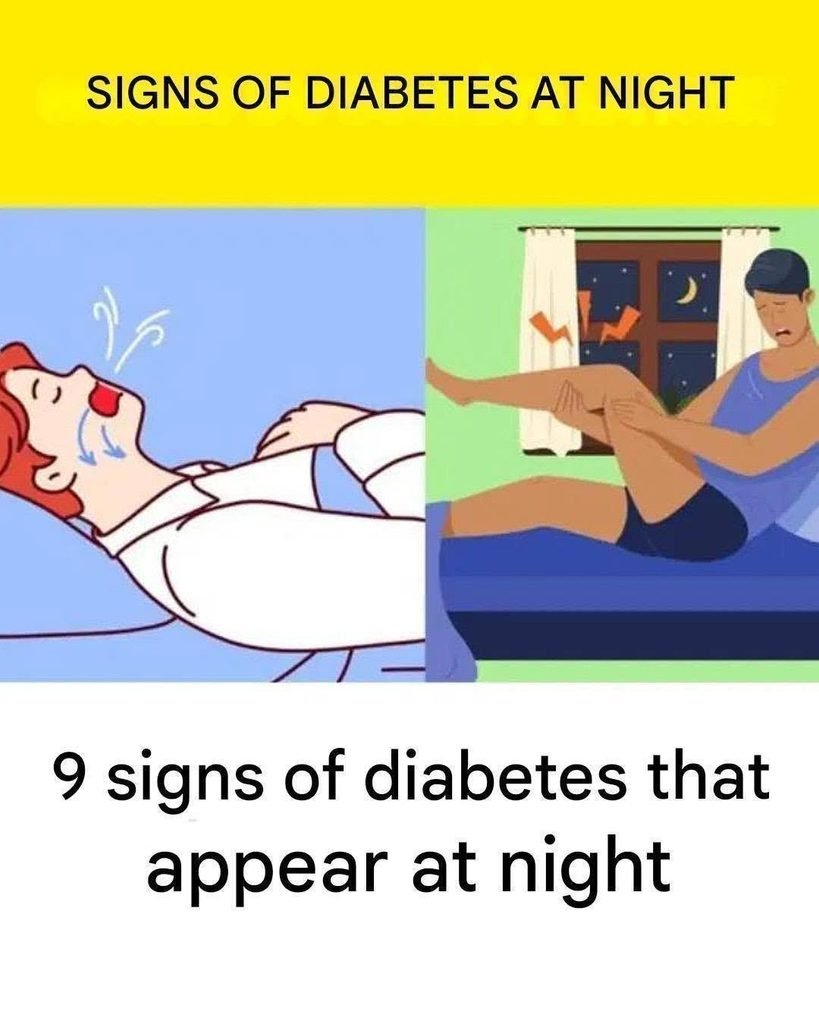
9 Signs of Diabetes That May Appear at Night
Have you noticed that you wake up several times during the night to use the bathroom, feel unusually thirsty before bed, or struggle with unexplained fatigue? These symptoms can have many causes, but when they occur together or persist over time, they may be worth discussing with a healthcare professional.
Diabetes is a condition in which blood glucose, also called blood sugar, becomes too high. It can develop gradually, and some people have few or no noticeable symptoms in its early stages.
Although diabetes symptoms are not limited to nighttime, certain changes may become especially noticeable when you are trying to sleep. Here are nine possible warning signs to recognize, what they may mean, and when to seek medical advice.
1. Waking Up Frequently to Urinate
One of the recognized symptoms of diabetes is frequent urination, including during the night.
When blood glucose levels become too high, the kidneys work to remove excess glucose through urine. This can increase urine production and interrupt your sleep.
You might notice that you:
- Wake up multiple times to use the bathroom.
- Produce more urine than usual.
- Feel tired the following morning because your sleep is repeatedly interrupted.
Frequent nighttime urination can also result from drinking fluids late in the evening, certain medications, an overactive bladder, or prostate problems.
What to do: If this is a new or persistent change, particularly if you also feel very thirsty, arrange a medical assessment and ask whether blood glucose testing is appropriate.
2. Feeling Extremely Thirsty Before Bed
Persistent thirst is another common symptom of high blood sugar.
When the body loses more fluid through urination, dehydration can develop, making you feel thirsty even after drinking water.
You may notice a dry mouth, repeated trips to the kitchen for water, or a strong urge to drink during the night.
Occasional thirst after exercise, salty food, or a warm day is normal. However, thirst that continues without an obvious explanation deserves attention.
What to do: Drink water as needed and seek medical advice if excessive thirst persists, especially alongside frequent urination, fatigue, or unexplained weight loss.
3. Night Sweats or Waking Up in a Cold Sweat
Waking up with damp clothing or soaked bedding can be uncomfortable, but it does not automatically mean you have diabetes.
For people who already have diabetes, nighttime sweating can sometimes be a symptom of hypoglycemia, meaning blood sugar has fallen too low. This can occur during sleep in people using insulin or certain glucose-lowering medicines.
Other signs of low blood sugar may include:
- Shaking or trembling
- A racing heartbeat
- Nightmares or restless sleep
- A morning headache
- Confusion or unusual behavior
Night sweats can also be caused by infections, hormonal changes, medication effects, or other medical conditions.
What to do: If you have diabetes and suspect low blood sugar, check your glucose if possible and follow your prescribed treatment plan. Severe confusion, seizures, or unconsciousness require emergency assistance.
4. Tingling, Burning, or Numbness in Your Feet
Some people experience burning, pins-and-needles sensations, or numbness in their feet that become more noticeable when they lie down at night.
Diabetes can damage nerves over time, a complication known as diabetic neuropathy. Symptoms may include discomfort, altered sensation, or reduced ability to feel heat, cold, and injuries.
However, tingling feet can also be related to nerve compression, vitamin deficiencies, circulation problems, or other conditions.
What to do: Arrange an assessment for persistent or unexplained tingling, especially if you have other possible symptoms of diabetes. Seek prompt care for a new foot wound, spreading redness, or signs of infection.
5. Blurred Vision in the Evening
Changes in blood glucose can affect the fluid balance in the eye’s lens, temporarily changing vision.
You might notice that text looks blurry, reading becomes difficult, or your vision seems to fluctuate at different times of the day.
Blurred vision has many possible causes, including dry eyes, eye strain, and problems that require an eye examination. It is not a reliable way to diagnose diabetes on its own.
What to do: Seek medical advice for new or recurring blurred vision and ask whether a blood glucose test is appropriate. Sudden vision loss or a sudden major change in vision requires urgent medical attention.
6. Persistent Fatigue Despite a Full Night’s Sleep
Feeling exhausted even after sleeping for several hours can be associated with diabetes.
When blood glucose is elevated, the body may not use glucose effectively. Frequent urination and disrupted sleep can also contribute to daytime fatigue.
You may notice:
- Low energy throughout the day
- Difficulty concentrating
- Unusual tiredness during routine activities
- Feeling unrefreshed after waking
Fatigue can also result from anemia, thyroid disorders, sleep apnea, stress, or inadequate sleep.
What to do: If fatigue persists without a clear explanation, speak with a healthcare professional. Blood tests can help identify diabetes and other possible causes.
7. Genital Itching or Recurrent Fungal Infections
High blood glucose can make certain infections more likely, including yeast infections that cause itching and irritation around the genital area.
Symptoms may include persistent itching, redness, discomfort, or recurring infections.
These problems are not exclusive to diabetes, and having an infection does not automatically mean your blood sugar is high.
What to do: Seek medical advice if symptoms keep returning, are severe, or do not improve with appropriate treatment. A clinician may recommend glucose testing depending on your symptoms and medical history.
8. Feeling Unusually Hungry Late at Night
Increased hunger is another recognized symptom of diabetes.
When the body cannot use glucose effectively, it may struggle to meet its energy needs. Some people experience persistent hunger even after eating a normal meal.
Late-night hunger, however, can also be related to missed meals, increased physical activity, sleep disruption, or eating habits.
What to do: Pay attention to persistent, unusual hunger, especially if it occurs alongside excessive thirst, frequent urination, or unexplained weight loss. Consider discussing these symptoms with a healthcare professional rather than trying to manage them with dietary changes alone.
9. Unexplained Weight Loss
Losing weight without deliberately changing your diet or exercise routine can be a warning sign of diabetes.
When the body cannot use glucose effectively, it may begin using stored fat and muscle for energy. This can lead to weight loss even when appetite remains normal or increases.
Unexplained weight loss is not specifically a nighttime symptom, but you may notice the change over several weeks while also experiencing nighttime thirst, frequent urination, or fatigue.
What to do: Arrange a prompt medical assessment if you are losing weight without trying, particularly if several other symptoms are present.
How Can You Tell Whether These Symptoms Are Diabetes-Related?
No single symptom can confirm diabetes. The most useful clues are persistent changes, symptoms that occur together, and appropriate blood tests.
A healthcare professional may recommend:
- A1C test: Estimates average blood glucose over approximately the previous two to three months.
- Fasting blood glucose: Measures blood sugar after a period without food.
- Random blood glucose: Measures blood sugar at a particular time, sometimes used when symptoms are present.
The appropriate test depends on your symptoms, risk factors, and medical history.
It is also important to know that some people with type 2 diabetes have no obvious symptoms. Screening may therefore be appropriate even when you feel well.
When Should You Seek Urgent Medical Care?
Do not wait for a routine appointment if possible diabetes symptoms are accompanied by severe illness.
Seek emergency medical care for symptoms such as:
- Vomiting or severe abdominal pain
- Rapid or deep breathing
- Fruity-smelling breath
- Severe dehydration
- Confusion or difficulty staying awake
These may be signs of diabetic ketoacidosis, a potentially life-threatening complication that can sometimes be the first indication of diabetes.
Can You Reduce Your Risk of Type 2 Diabetes?
Not every type of diabetes can be prevented. Type 1 diabetes, for example, is an autoimmune condition and is not caused simply by eating sugar.
For people at risk of type 2 diabetes, helpful steps can include:
- Eating a balanced diet with vegetables, whole grains, and appropriate portions.
- Being physically active regularly, according to your abilities.
- Maintaining a healthy weight or pursuing gradual weight management if recommended.
- Getting adequate sleep.
- Attending recommended health screenings.
These habits can support overall health, but they cannot replace testing or treatment when diabetes is suspected.
Final Thoughts
Waking up frequently to urinate, feeling unusually thirsty, experiencing unexplained fatigue, or noticing changes in your feet or vision may be reasons to check your health.
These symptoms do not necessarily mean you have diabetes, and several can be caused by other conditions. However, when symptoms persist or occur together, a medical assessment and blood glucose testing can help identify the cause.
Do not ignore persistent symptoms simply because they appear at night. Early diagnosis and appropriate treatment can help reduce the risk of complications.
Medical disclaimer: This article is for educational purposes only and is not a substitute for professional medical advice, diagnosis, or treatment.
SEO Details
SEO Title: 9 Signs of Diabetes That May Appear at Night
Focus Keyphrase: signs of diabetes at night
URL Slug: signs-of-diabetes-at-night
Meta Description: Discover 9 possible signs of diabetes that may become noticeable at night, when to seek medical advice, and which symptoms need urgent attention.
Category: Health & Wellness
Suggested Featured Image: A person awake at night beside a glass of water, with a blood glucose meter on a bedside table.