
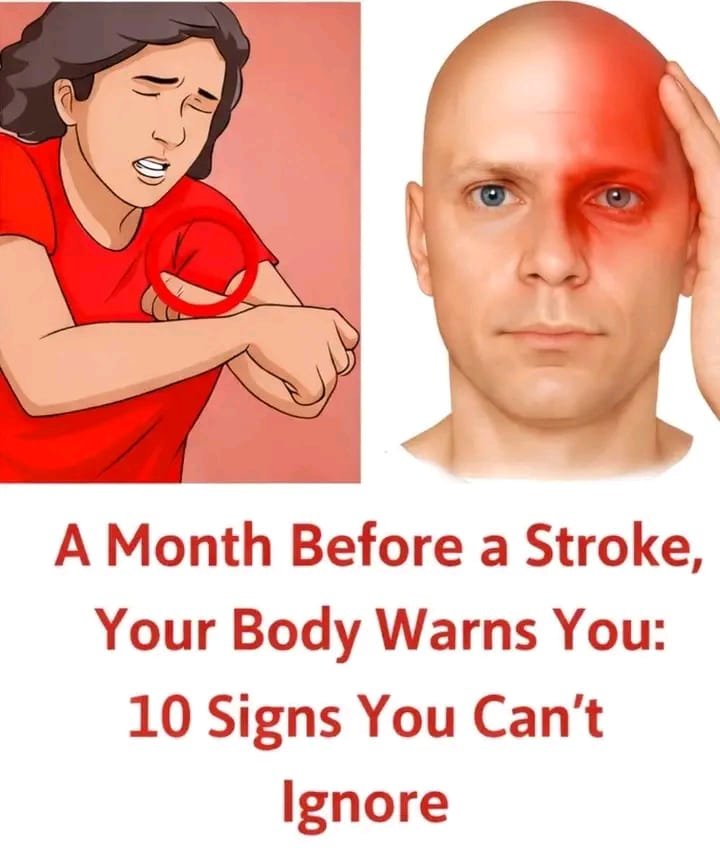
“One Month Before a Stroke” Myth: The Real Warning Signs You Must Not Ignore
A stroke can happen suddenly, sometimes without any obvious warning. You may have seen claims online suggesting that your body sends specific signals exactly one month before a stroke. But the truth is more complicated: there is no reliable countdown or universal set of symptoms that predicts a stroke 30 days in advance.
What doctors do know is that recognizing stroke symptoms immediately—and taking brief warning episodes seriously—can save lives and reduce the risk of lasting brain damage.
Understanding the real warning signs, knowing what to do in an emergency, and managing your risk factors are far more useful than relying on frightening online claims.
Can Your Body Warn You One Month Before a Stroke?
Not in a predictable way. Some people experience a transient ischemic attack (TIA), sometimes called a “mini-stroke,” before a more serious stroke. Others have no noticeable warning beforehand.
A TIA occurs when blood flow to part of the brain is temporarily disrupted. Its symptoms can resemble those of a stroke, but they may disappear within minutes or hours.
A TIA is a medical emergency, even if the person feels completely normal afterward. It can signal a higher risk of a subsequent stroke, particularly in the hours and days that follow. Prompt medical assessment may help identify the cause and prevent another event. <Cite refs={[“turn918478search4″,”turn918478search5”]}/>
The important lesson is not to wait for a particular number of days or weeks. Sudden neurological symptoms need immediate attention.
7 Real Stroke Warning Signs You Must Not Ignore
Stroke symptoms often begin suddenly. The signs depend on which part of the brain is affected, and a person may experience only one or several symptoms.
1. Sudden Weakness or Numbness on One Side
One of the most recognizable warning signs is sudden weakness or numbness affecting the face, arm, or leg, especially on one side of the body.
You might notice that:
- One arm suddenly feels weak or difficult to lift.
- One side of the face looks uneven.
- One leg becomes difficult to control.
- Numbness develops unexpectedly on one side.
Do not assume the symptoms are simply caused by tiredness, sleeping in an awkward position, or getting older. Sudden one-sided weakness requires emergency assessment.
2. Facial Drooping
Ask the person to smile. Does one side of the face appear to droop? Does the smile look uneven?
Facial drooping can be a sign that the brain is no longer controlling facial muscles normally. It is particularly concerning when it appears suddenly or occurs alongside weakness or speech difficulties.
Even if the change seems mild, do not wait to see whether it improves.
3. Difficulty Speaking or Understanding Words
A person experiencing a stroke may suddenly struggle to speak clearly, find the right words, or understand what someone else is saying.
You may notice slurred speech, unusual confusion, difficulty answering simple questions, or an inability to repeat a short sentence.
These symptoms can be mistaken for fatigue or confusion, especially in older adults. However, a sudden change in speech or comprehension should be treated as an emergency.
4. Sudden Vision Changes
A stroke may affect vision in one or both eyes. Possible symptoms include:
- Sudden blurred or double vision.
- Partial or complete loss of vision.
- Difficulty seeing objects clearly.
- A sudden change in visual awareness.
New vision problems can have several causes, but when they begin suddenly, they need urgent medical evaluation—particularly if accompanied by dizziness, weakness, or difficulty speaking. <Cite refs={[“turn918478search0″,”turn918478search1”]}/>
5. Sudden Dizziness or Loss of Balance
Unexpected difficulty walking, severe dizziness, loss of coordination, or an inability to maintain balance can be signs of a stroke.
Some people may suddenly veer to one side or feel unable to stand safely. These symptoms deserve special attention when they occur with double vision, speech difficulties, weakness, or other neurological changes.
Although dizziness is common and often has non-stroke causes, sudden severe symptoms should never be dismissed.
6. A Sudden, Severe Headache
A sudden, extremely severe headache with no known cause can indicate a serious medical emergency, including bleeding in or around the brain.
Seek emergency help immediately if a severe headache reaches its maximum intensity suddenly, especially if it is accompanied by vomiting, neck stiffness, confusion, fainting, or neurological symptoms.
Not every stroke causes a headache, and most headaches are not strokes. The key concern is a sudden, unusual, or exceptionally severe headache.
7. Symptoms That Disappear After a Few Minutes
This is one of the most dangerous warning signs to overlook.
A person might suddenly experience weakness, speech difficulty, vision loss, or numbness, only to feel normal again shortly afterward.
It may be tempting to assume that the problem has passed. However, temporary symptoms can indicate a TIA, which requires urgent assessment.
Never wait for symptoms to return before seeking help. It is not possible to distinguish a TIA from a completed stroke safely at home. <Cite refs={[“turn918478search5″,”turn918478search10”]}/>
Remember B.E. F.A.S.T.: How to Recognize a Stroke
One practical way to remember the major warning signs is the B.E. F.A.S.T. method.
- B — Balance: Is there a sudden loss of balance or coordination?
- E — Eyes: Has vision suddenly changed?
- F — Face: Does one side of the face droop?
- A — Arms: Is one arm weak or numb?
- S — Speech: Is speech slurred, unusual, or difficult to understand?
- T — Time: Call emergency services immediately.
If any of these signs appear suddenly, do not wait for every symptom to develop. A single warning sign may be enough to require emergency care. <Cite refs={[“turn918478search0″,”turn918478search1”]}/>
What Should You Do If You Suspect a Stroke?
Act immediately. The faster a person receives appropriate treatment, the greater the opportunity to limit brain damage.
- Call your local emergency number. Tell the dispatcher that you suspect a stroke and describe the symptoms.
- Record the time symptoms began. If you do not know the exact time, note when the person was last known to be well.
- Do not drive the person yourself if emergency medical transport is available. Emergency responders can begin assessment and coordinate urgent care.
- Do not give food, drinks, aspirin, or other medication unless directed by a medical professional. Swallowing may be impaired, and aspirin can be dangerous in some types of stroke.
- Stay with the person and monitor their condition while waiting for emergency assistance.
If symptoms disappear, emergency assessment is still necessary.
In Morocco, call the appropriate local emergency service for your area. Do not delay seeking help while searching online for more information.
Who Is at Higher Risk of Stroke?
A stroke can happen at any age, but certain factors increase the likelihood of one occurring.
Important risk factors include:
- High blood pressure: A major risk factor for both ischemic and hemorrhagic stroke.
- High cholesterol: Can contribute to the buildup of plaque in blood vessels.
- Diabetes: Can damage blood vessels and increase cardiovascular risk.
- Smoking: Damages blood vessels and raises the risk of stroke.
- Atrial fibrillation: An irregular heart rhythm that can allow blood clots to form.
- Previous stroke or TIA: Increases the importance of medical follow-up and prevention.
- Physical inactivity and an unhealthy diet: Can contribute to high blood pressure, diabetes, and other risk factors.
- Older age and family history: May also influence individual risk.
Having one or more risk factors does not mean a stroke is inevitable. Managing them with appropriate medical care can reduce risk. <Cite refs={[“turn918478search4″,”turn918478search13”]}/>
How Can You Help Reduce Your Stroke Risk?
Although no lifestyle change can guarantee that a stroke will never happen, several measures can improve cardiovascular health.
Check Your Blood Pressure
High blood pressure often has no obvious symptoms. Regular checks can help identify a problem before it causes complications. Follow your clinician’s advice about treatment and monitoring.
Take Prescribed Medication Correctly
If you have been prescribed medication for blood pressure, cholesterol, diabetes, or an irregular heartbeat, take it as directed. Do not stop or change treatment without consulting your healthcare professional.
Eat a Balanced Diet
Build meals around vegetables, fruits, beans, whole grains, nuts, and other nutritious foods. Limit excess salt, highly processed foods, and foods high in saturated fat.
Stay Physically Active
Choose activities suited to your ability, such as walking, cycling, swimming, or gentle exercise. If you have a medical condition or mobility limitations, ask a healthcare professional what level of activity is appropriate.
Avoid Smoking
Stopping smoking can improve blood vessel health and reduce cardiovascular risk. Ask a healthcare professional about evidence-based support if quitting is difficult.
Attend Regular Health Checkups
Routine appointments can help identify and manage conditions such as high blood pressure, diabetes, high cholesterol, and atrial fibrillation. Prevention should be tailored to your medical history and individual risk.
Frequently Asked Questions
Does a stroke always give warning signs a month beforehand?
No. There is no established pattern that reliably predicts a stroke exactly one month in advance. Some people experience a TIA before a stroke, while others have no clear warning symptoms.
Can a mini-stroke happen without pain?
Yes. A TIA may cause sudden weakness, numbness, vision changes, or speech difficulties without pain. Symptoms can disappear quickly, but urgent medical assessment is still necessary.
Can stroke symptoms disappear and then return?
Yes. Temporary symptoms may indicate a TIA, and neurological symptoms can also fluctuate in some serious conditions. Do not wait for symptoms to return—seek emergency care immediately.
Is a severe headache always a sign of stroke?
No. Most headaches are not caused by stroke. However, a sudden, exceptionally severe headache—especially one with neurological symptoms—can signal a life-threatening emergency.
Can younger adults have strokes?
Yes. Although stroke risk generally increases with age, younger adults can also experience strokes. Sudden stroke symptoms should be treated as an emergency regardless of age.
Final Thoughts
The claim that your body reliably warns you exactly one month before a stroke is misleading. There is no dependable 30-day countdown to recognize.
What matters most is knowing the genuine warning signs: sudden facial drooping, one-sided weakness, speech difficulties, vision changes, loss of balance, and an unexplained severe headache.
A brief episode that disappears may still be a medical emergency. Remember B.E. F.A.S.T., seek emergency help immediately when symptoms occur, and work with your healthcare professional to manage your individual risk.
Recognizing the signs and acting quickly can make a life-changing difference.
Medical disclaimer: This article is for educational purposes and is not a substitute for professional medical advice, diagnosis, or treatment. Suspected stroke or TIA requires immediate emergency medical assessment.