
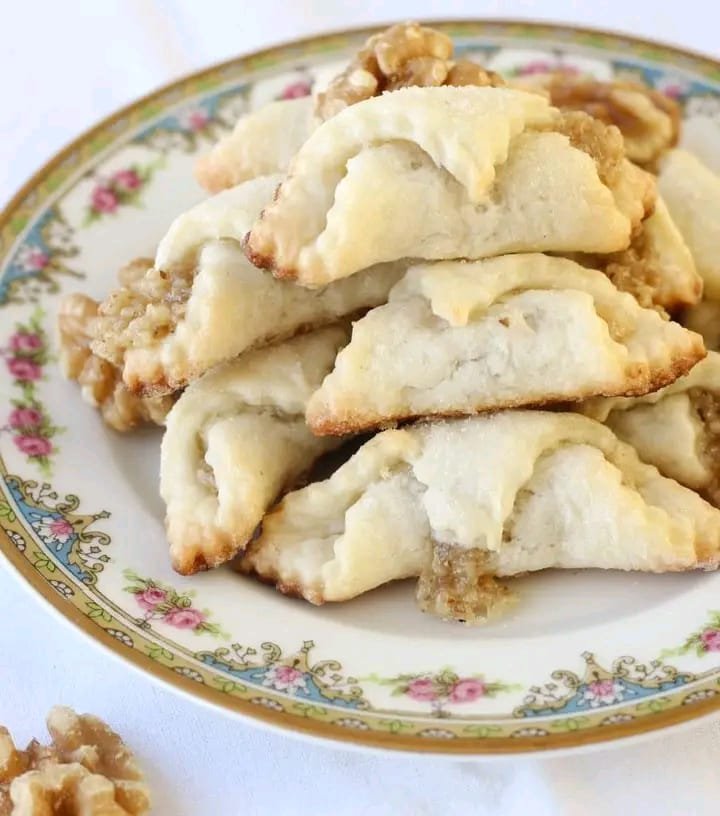
Authentic Hungarian Walnut Rolls (Diós Bejgli) 🇭🇺
A Traditional Hungarian Christmas Pastry Filled With Rich, Sweet Walnuts
SEO Title: Authentic Hungarian Walnut Rolls (Diós Bejgli) – Traditional Recipe
Focus Keyphrase: Hungarian walnut rolls
URL Slug: authentic-hungarian-walnut-rolls-dios-bejgli
Meta Description: Discover how to make authentic Hungarian Diós Bejgli, a traditional walnut-filled Christmas roll with tender pastry, a rich walnut filling, and a beautiful golden crust.
Prep Time: 45 minutes
Chilling Time: 1 hour
Baking Time: 35–45 minutes
Total Time: Approximately 2 hours 30 minutes
Servings: 2 large rolls, about 16–20 slices
Cuisine: Hungarian
Category: Dessert, Holiday Baking
Introduction: A Hungarian Christmas Tradition
Few pastries are as closely associated with Hungarian Christmas celebrations as Bejgli. These elegant rolled pastries feature a delicate, buttery dough wrapped around a rich filling, most commonly made with walnuts or poppy seeds.
The walnut version, known as Diós Bejgli, is especially beloved for its sweet, nutty flavor and beautiful spiral when sliced. Families traditionally serve it during the Christmas season, alongside coffee, tea, and other festive Hungarian treats.
Although bejgli may look like an elaborate bakery creation, it is entirely possible to make at home. The key is preparing a firm but tender dough, keeping the walnut filling moist without making it runny, and allowing the pastry to cool completely before slicing.
Follow this traditional-inspired recipe to bring a taste of Hungarian holiday baking into your kitchen.
Ingredients
For the Pastry Dough
- 500 g (4 cups) all-purpose flour
- 200 g (7 oz) unsalted butter, cold and cubed
- 50 g (¼ cup) granulated sugar
- 20 g fresh yeast or 7 g (2¼ teaspoons) active dry yeast
- 100 ml (⅓ cup plus 1 tablespoon) lukewarm milk
- 2 egg yolks
- 1 whole egg
- 1 pinch of salt
- 1 teaspoon vanilla sugar or vanilla extract, optional
- 1 teaspoon finely grated lemon zest, optional
For the Walnut Filling
- 300 g (about 3 cups) finely ground walnuts
- 180–220 g (¾–1 cup) granulated sugar, according to taste
- 150 ml (⅔ cup) milk
- 50 g (about ⅓ cup) raisins, optional
- 1 teaspoon vanilla extract or vanilla sugar
- 1 teaspoon finely grated lemon zest
- ½ teaspoon ground cinnamon, optional
- 1–2 tablespoons breadcrumbs, only if needed to absorb excess moisture
For the Egg Wash
- 1 egg yolk
- 1 egg white
Instructions
Step 1: Prepare the Yeast
Warm the milk until lukewarm, not hot. Stir in the yeast and a teaspoon of the measured sugar.
Let it stand for approximately 5–10 minutes, until the yeast begins to foam if using a yeast that requires activation.
If using instant yeast, follow the package instructions; it may be mixed directly with the flour.
Step 2: Make the Pastry Dough
Place the flour, remaining sugar, and salt in a large mixing bowl.
Add the cold butter and rub it into the flour with your fingertips until the mixture resembles fine crumbs.
Add the egg yolks, whole egg, vanilla, lemon zest if using, and activated yeast mixture.
Mix until a firm dough forms. Knead briefly until smooth, taking care not to overwork it. The dough should be pliable but not sticky.
Divide the dough into two equal portions. Shape each into a rectangle, wrap, and refrigerate for approximately 30–60 minutes.
Step 3: Prepare the Walnut Filling
Pour the milk into a saucepan and add the sugar. Heat gently, stirring until the sugar dissolves.
Remove from the heat and stir in the ground walnuts, vanilla, lemon zest, and cinnamon if desired. Add the raisins if using.
Allow the mixture to cool completely.
The filling should be thick and spreadable rather than wet. If it seems too loose, mix in one tablespoon of breadcrumbs at a time until it holds together.
Important: Let the filling cool before spreading it over the pastry. A hot filling can soften the butter in the dough and make rolling more difficult.
Step 4: Roll Out the Dough
Preheat the oven to 180°C (350°F). Line a baking tray with parchment paper.
On a lightly floured surface, roll each dough portion into a rectangle approximately 25 × 30 cm (10 × 12 inches).
Try to keep the thickness even so the pastry bakes uniformly.
Step 5: Add the Walnut Filling
Divide the cooled filling evenly between the two rectangles.
Spread it over each piece of dough, leaving a border of about 1–2 cm (½–¾ inch) around the edges.
Fold the shorter sides inward slightly to help contain the filling. Starting from one long side, roll each rectangle into a neat log.
Place the rolls seam-side down on the prepared baking tray, leaving space between them.
Step 6: Prepare the Traditional Egg Wash
For the characteristic bejgli finish, brush the rolls with beaten egg yolk.
Let the yolk dry for approximately 15–20 minutes, then brush with egg white and allow the surface to dry again.
This two-stage egg wash helps create the traditional glossy, marbled appearance. Small surface cracks can occur naturally during baking and are not necessarily a sign of failure.
Step 7: Bake Until Golden
Prick the rolls lightly in several places with a skewer to allow steam to escape.
Bake for approximately 35–45 minutes, or until the pastry is golden brown and cooked through. Baking time will vary depending on your oven and the thickness of the rolls.
If the tops brown too quickly, loosely cover them with foil for the remaining baking time.
Step 8: Cool Completely Before Slicing
Remove the rolls from the oven and let them cool on the tray briefly before transferring them to a cooling rack.
Allow them to cool completely before cutting. This gives the filling time to settle and helps the slices hold their beautiful walnut spiral.
Use a sharp serrated knife and a gentle sawing motion for clean slices.
Secrets to Perfect Hungarian Diós Bejgli
- Keep the dough cool: Chilling helps the pastry remain easier to handle and supports a tender texture.
- Avoid a wet filling: Excess moisture can cause the filling to leak or affect the pastry’s structure.
- Do not overfill: Too much filling makes the rolls harder to seal and more likely to split.
- Roll evenly: Consistent thickness helps both rolls bake at the same rate.
- Prick the surface: Small holes allow steam to escape during baking.
- Cool completely: Cutting too early can make the filling smear and the pastry crumble.
- Expect some cracking: Traditional bejgli can develop a distinctive marbled surface, and small cracks are common.
Delicious Variations
Hungarian Poppy Seed Bejgli (Mákos Bejgli)
Replace the walnut filling with a sweetened ground poppy-seed filling. Poppy-seed and walnut rolls are both classic Hungarian Christmas favorites.
Walnut and Raisin Bejgli
Add raisins soaked in warm water and thoroughly drained before mixing them into the filling. They provide little bursts of sweetness.
Orange and Walnut Bejgli
Replace some of the lemon zest with finely grated orange zest for a fragrant citrus note.
Lightly Spiced Walnut Bejgli
Add a small amount of cinnamon to the filling for extra warmth. Keep the spices subtle so the walnut flavor remains the star.
How to Store Hungarian Walnut Rolls
At room temperature: Once completely cooled, wrap the rolls or store them in an airtight container in a cool, dry place for several days.
Refrigerator: Refrigeration can extend storage time, although it may firm the pastry. Bring slices to room temperature before serving.
Freezer: Wrap the cooled rolls tightly and freeze for up to 2–3 months for best quality. Thaw while still wrapped to help prevent the pastry from drying out.
Frequently Asked Questions
What does Diós Bejgli mean?
Diós means walnut-based or containing walnuts in Hungarian, while bejgli refers to the traditional rolled pastry. Diós Bejgli is therefore a walnut-filled Hungarian roll.
Why did my bejgli crack?
Cracking can occur when the filling is too moist, the rolls are overfilled, or steam builds up during baking. Keeping the filling thick, rolling evenly, and pricking the pastry can help, although some cracking is traditional.
Why is my walnut filling dry?
The filling may contain too little liquid or may have been cooked for too long. Add liquid gradually when preparing it, and aim for a moist, thick consistency rather than a crumbly mixture.
Can I make bejgli ahead of time?
Yes. Bejgli is well suited to holiday preparation. Bake it in advance, allow it to cool completely, and store it well wrapped until serving.
Can I use store-bought pastry?
You can experiment with ready-made pastry, but the texture and flavor will differ from traditional bejgli dough. For the classic Hungarian result, homemade yeast-enriched pastry is recommended.
Final Thoughts
Authentic Hungarian Walnut Rolls, or Diós Bejgli, are more than a festive dessert. They are part of Hungary’s treasured baking traditions, bringing families together around the holiday table.
The tender pastry, fragrant walnut filling, and beautiful spiral make every slice special. With a little patience and careful preparation, you can recreate this classic at home and share a delicious piece of Hungarian heritage with family and friends.
Bake it for Christmas, serve it with coffee, and enjoy the timeless taste of traditional Hungarian bejgli!